Edible plant · Growing guide
Cauliflower
Brassica oleracea var. botrytis · Brassica family
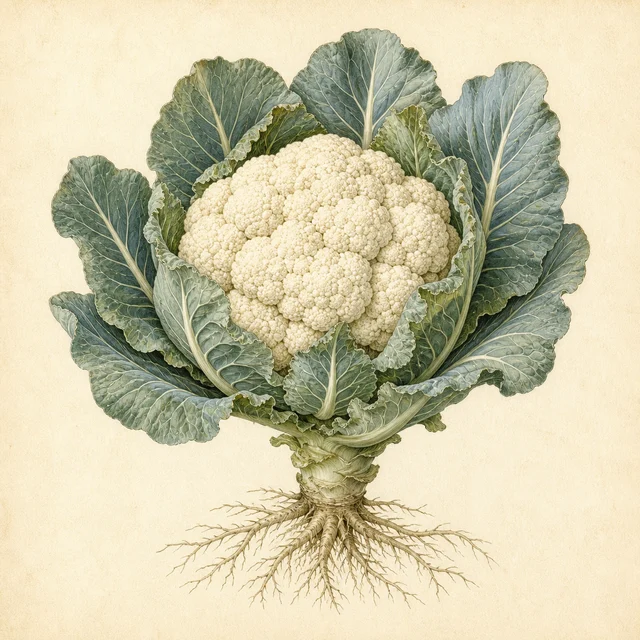
Cauliflower is a rosette edible plant grown for heading crop and cool season. Use this guide to match its light, water, soil, space, seasonal care, and safety needs.
- Reliable light
- Full sun
- Water pattern
- Consistent
- Mature size
- 28 × 28 in
- Final spacing
- 24 in
- Season
- cool
01 · Light & site
Give it the light its growth depends on.
Full sun, with roughly 6 to 8 hours of useful light. Cool spring or fall conditions
02 · Water & soil
Keep roots supplied without trapping water.
Keep the active root zone evenly moist while preserving drainage.
- Soil
- Loose, organic garden soil
- Drainage
- Moist but drained
- pH
- Species-dependent, commonly mildly acidic to neutral
03 · Spacing & roots
Make room for the mature plant.
Space plants about 24 inches apart. Expect a mature plant around 28 inches tall by 28 inches wide.
A branching root system needs the stated depth plus aerated soil around the mature spread.
04 · Start
Begin with the method that protects establishment.
Direct sow or transplant according to crop-specific temperature and root-disturbance guidance.
05 · Care
Support healthy growth through the season.
Usually self-supporting at the stated mature size. Add a discreet stake only if wind, bloom weight, or an exposed site makes it necessary.
- Upkeep
- High
- Feeding
- High
- Watch for
- Cabbageworms, Aphids, Buttoning
06 · Flower or harvest
Harvest and maturity
55 to 100 days. Use the seed packet or plant label for cultivar-specific timing and harvest cues, then adjust for temperature, light, and the stage you intend to pick.
07 · Safety
Know the cautions before you place or use it.
- Confirm cultivar, regional timing, and toxicity or food-use details with local extension guidance.
- Keep unknown plant parts away from children and pets.
08 · Sources
Check the evidence behind the guide.
Guide record: July 20, 2026. Region, cultivar, regulations, and current product labels can change the right decision.
Working checklist