Find the reliable light
Observe direct sunlight across several days. Full-sun crops generally need the strongest part of the site, while leafy greens can use a shorter window.
First season · Start here
No shopping list can replace light, space, water, and a realistic amount of attention. Make these choices in order and the plant list becomes much easier.
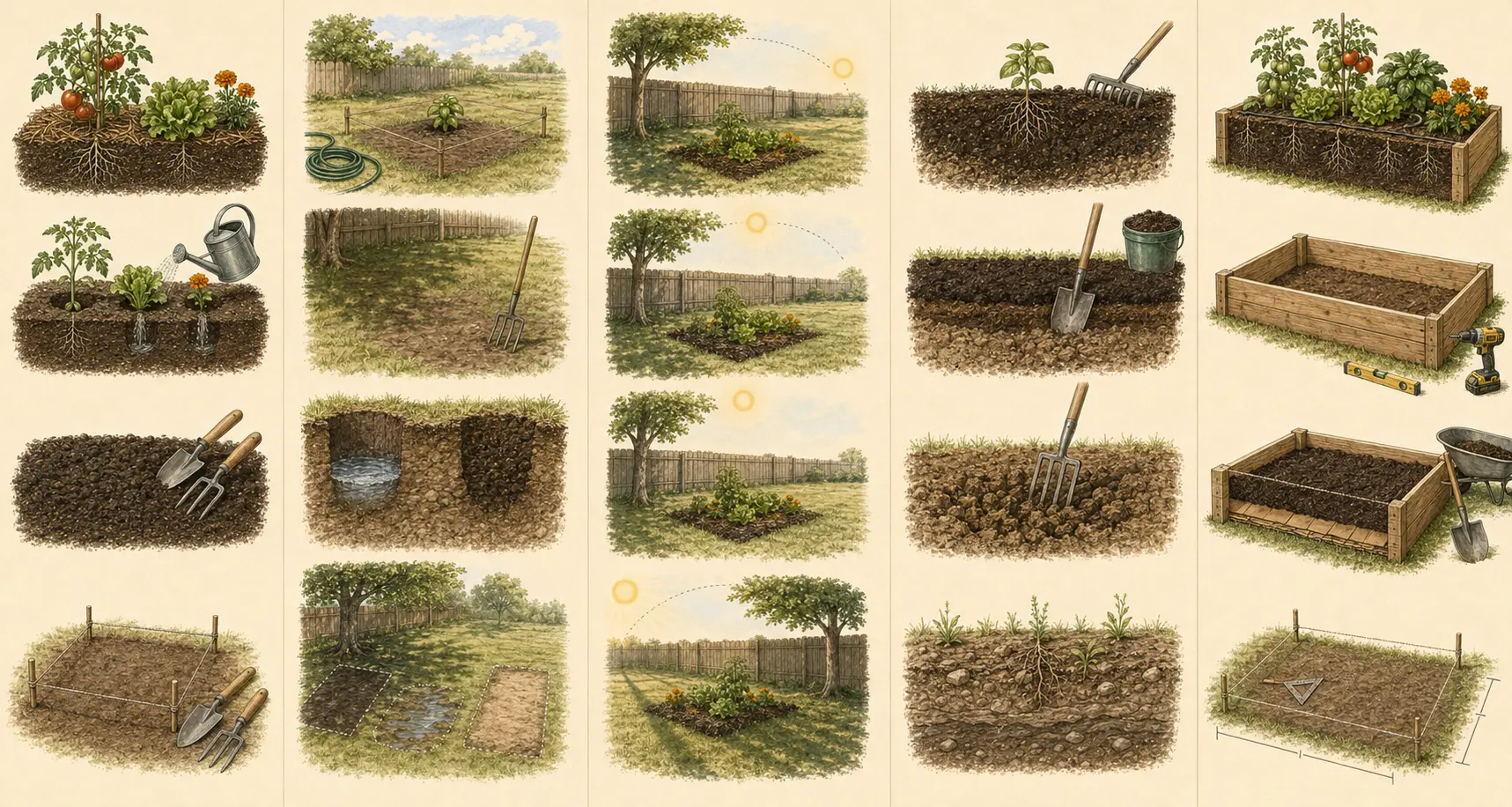
See the complete system
The illustrated sequence keeps the early work connected: a practical location, workable soil, reachable water, realistic spacing, and a bed small enough to observe closely.
Open the complete illustrated lesson →Observe direct sunlight across several days. Full-sun crops generally need the strongest part of the site, while leafy greens can use a shorter window.
A small bed by the door often succeeds more reliably than a larger plot hidden at the edge of the property.
Choose whether you care most about food, flowers, learning, convenience, pollinators, or a repeatable household harvest.
Begin with three to five plants that fit the conditions. Repetition teaches more than a collection of unrelated experiments.
Make sure water reaches the site and roots can access air, moisture, and workable soil before bringing plants home.
Use final spacing from the crop guide rather than the size of a seedling on purchase day.
Two short inspections each week catch dry soil, pests, support needs, and harvest opportunities before they become large problems.
Working checklist