Fruit · Growing guide
Elderberry
Sambucus canadensis · Muskroot family
Elderberry is a shrub fruit grown for small fruit, native option, and large shrub. Use this guide to match its light, water, soil, space, seasonal care, and safety needs.
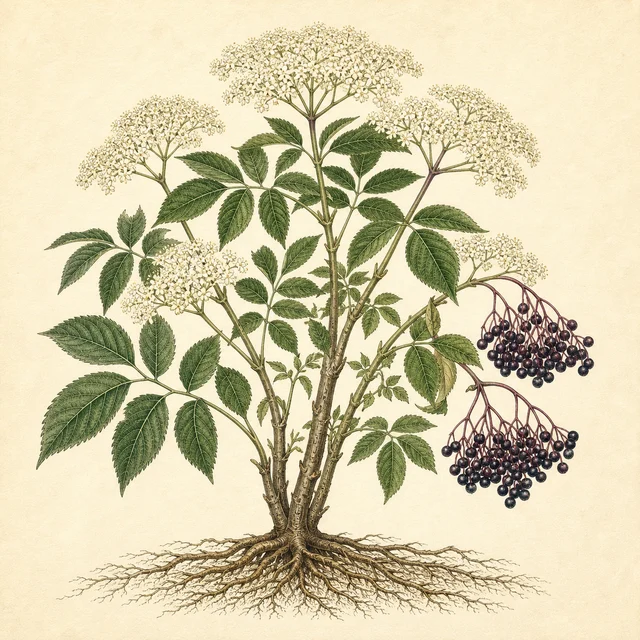
- Reliable light
- Full to part sun
- Water pattern
- Consistent
- Mature size
- 96 × 96 in
- Final spacing
- 72 in
- Season
- perennial
Plant identity, types & settings
One plant guide. Clear details underneath.
Elderberry is the plant identity. Container, landscape, cutting, indoor, hydroponic, and harvest labels describe ways to grow it; they are not additional plant or cultivar names.
Ways to grow it
These are garden or production settings—not cultivar names and not extra plants.
Container
Use a durable acid-appropriate or crop-appropriate mix and protect roots in winter.
- Mature size
- 79 × 44 in
- Spacing
- 32 in
- Container
- 28+ gal · 30+ in deep
Managed Row
Preserve both harvest access and renewal-pruning access along the row.
- Mature size
- 116 × 63 in
- Spacing
- 63 in
- Container
- 40+ gal · 30+ in deep
Protected Culture
Ventilate, manage pollination, and monitor mites under cover.
- Mature size
- 106 × 50 in
- Spacing
- 38 in
- Container
- 35+ gal · 30+ in deep
Trellised
Build the permanent trellis before canes or vines become difficult to move.
- Mature size
- 125 × 39 in
- Spacing
- 26 in
- Container
- 44+ gal · 30+ in deep
01 · Light & site
Give it the light its growth depends on.
Full to part sun, with roughly 4 to 7 hours of useful light. Perennial timing and winter survival are region-specific
02 · Water & soil
Keep roots supplied without trapping water.
Keep the active root zone evenly moist while preserving drainage.
- Soil
- Loose, organic garden soil
- Drainage
- Moist but drained
- pH
- Species-dependent, commonly mildly acidic to neutral
03 · Spacing & roots
Make room for the mature plant.
Space plants about 72 inches apart. Expect a mature plant around 96 inches tall by 96 inches wide.
A branching root system needs the stated depth plus aerated soil around the mature spread.
04 · Start
Begin with the method that protects establishment.
Use a healthy transplant, division, slip, or crown suited to the species.
05 · Care
Support healthy growth through the season.
Stake, cage, or permanent support as appropriate. Put it in place early, before stems, canes, vines, or fruit load make access difficult.
- Upkeep
- High
- Feeding
- High
- Watch for
- Cane borers, Bird competition, Leaf spot
06 · Flower or harvest
Harvest and maturity
Fruit after establishment. Use the seed packet or plant label for cultivar-specific timing and harvest cues, then adjust for temperature, light, and the stage you intend to pick.
07 · Safety
Know the cautions before you place or use it.
- Raw or improperly prepared plant parts can be unsafe; use validated food preparation guidance.
- Plant more than one compatible cultivar when recommended for fruit set.
08 · Sources
Check the evidence behind the guide.
Guide record: July 20, 2026. Region, cultivar, regulations, and current product labels can change the right decision.
Working checklist