Native & pollinator plant · Growing guide
Florence Fennel
Foeniculum vulgare var. azoricum · Carrot family
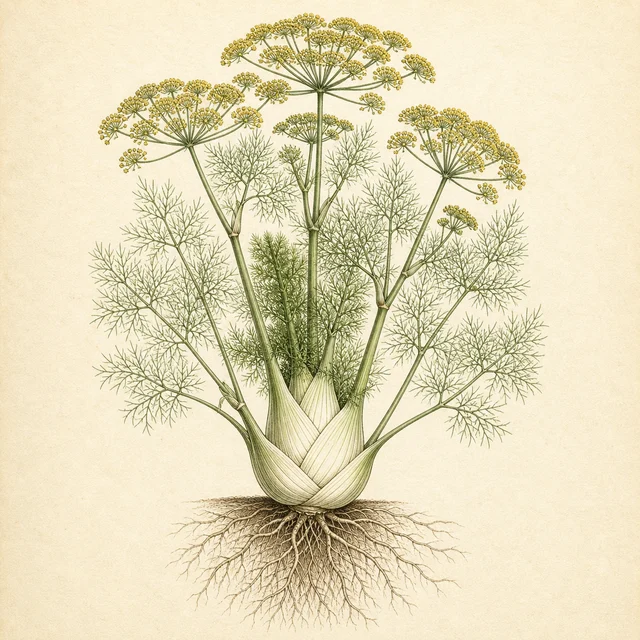
Florence Fennel is an upright native & pollinator plant grown for culinary herb, bulb crop, and pollinator. Use this guide to match its light, water, soil, space, seasonal care, and safety needs.
- Reliable light
- Full sun
- Water pattern
- Moderate
- Mature size
- 36 × 18 in
- Final spacing
- 12 in
- Season
- cool
Plant identity, types & settings
One plant guide. Clear details underneath.
Florence Fennel is the plant identity. Container, landscape, cutting, indoor, hydroponic, and harvest labels describe ways to grow it; they are not additional plant or cultivar names.
Plant types and varieties
These are real planning-distinct types or varieties attached to Florence Fennel. Named cultivars can still vary, so confirm the packet or plant label.
Fennel · bulb
A fennel type grown for thickened overlapping leaf bases during cool, steady growth.
- Mature size
- 34 × 18 in
- Spacing
- 15 in
- Support
- Usually none
Fennel · herb
A tall fennel grown for fronds, flowers, seed, and beneficial-insect value rather than a swollen base.
- Mature size
- 72 × 26 in
- Spacing
- 24 in
- Support
- Stake in exposed locations
Ways to grow it
These are garden or production settings—not cultivar names and not extra plants.
Garden Crop
Keep harvest access open and label the species and intended plant part; culinary, aromatic, and dye uses are not interchangeable.
- Mature size
- 38 × 23 in
- Spacing
- 23 in
- Container
- 10+ gal · 15+ in deep
Indoor Hydroponic Crop
Select compact seed stock, provide active light, and sanitize the recirculating system between crops.
- Mature size
- 29 × 17 in
- Spacing
- 12 in
- Container
- 5+ gal · 15+ in deep
01 · Light & site
Give it the light its growth depends on.
Full sun, with roughly 6 to 8 hours of useful light. Cool spring or fall conditions
02 · Water & soil
Keep roots supplied without trapping water.
Water the complete root zone, then recheck conditions before watering again.
- Soil
- Loose, moderately fertile garden soil
- Drainage
- Well drained
- pH
- Species-dependent, commonly mildly acidic to neutral
03 · Spacing & roots
Make room for the mature plant.
Space plants about 12 inches apart. Expect a mature plant around 36 inches tall by 18 inches wide.
A branching root system needs the stated depth plus aerated soil around the mature spread.
04 · Start
Begin with the method that protects establishment.
Direct sow or transplant according to crop-specific temperature and root-disturbance guidance.
05 · Care
Support healthy growth through the season.
Usually self-supporting; shelter tall flower stems from wind. Add a discreet stake only if wind, bloom weight, or an exposed site makes it necessary.
- Upkeep
- Low
- Feeding
- Low
- Watch for
- Aphids, Swallowtail caterpillars, Bolting
06 · Flower or harvest
Flowering and wildlife value
75 to 100 days. Harvest only correctly identified plant parts with an established culinary use. Let some stems flower when pollinator value is part of the goal.
07 · Safety
Know the cautions before you place or use it.
- Confirm cultivar, regional timing, and toxicity or food-use details with local extension guidance.
- Keep unknown plant parts away from children and pets.
08 · Sources
Check the evidence behind the guide.
Guide record: July 20, 2026. Region, cultivar, regulations, and current product labels can change the right decision.
Working checklist