Fruit · Growing guide
Grape
Vitis spp. · Grape family
Grape is a vine fruit grown for vertical fruit, perennial, and trellis. Use this guide to match its light, water, soil, space, seasonal care, and safety needs.
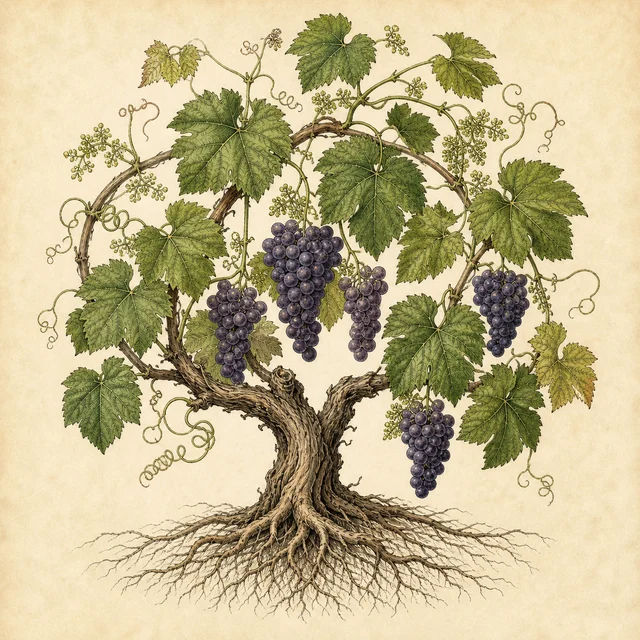
- Reliable light
- Full sun
- Water pattern
- Moderate
- Mature size
- 84 × 96 in
- Final spacing
- 72 in
- Season
- perennial
Plant identity, types & settings
One plant guide. Clear details underneath.
Grape is the plant identity. Container, landscape, cutting, indoor, hydroponic, and harvest labels describe ways to grow it; they are not additional plant or cultivar names.
Plant types and varieties
These are real planning-distinct types or varieties attached to Grape. Named cultivars can still vary, so confirm the packet or plant label.
table
A permanent grapevine managed for large attractive clusters and fresh eating on an arbor or cordon system.
- Mature size
- 84 × 84 in
- Spacing
- 84 in
- Support
- Permanent arbor, pergola, or wire trellis
wine
A permanent grapevine managed as a dense, precisely pruned fruiting canopy for smaller processing clusters.
- Mature size
- 84 × 60 in
- Spacing
- 60 in
- Support
- Permanent posts and fruiting wires
01 · Light & site
Give it the light its growth depends on.
Full sun, with roughly 6 to 8 hours of useful light. Perennial timing and winter survival are region-specific
02 · Water & soil
Keep roots supplied without trapping water.
Water the complete root zone, then recheck conditions before watering again.
- Soil
- Loose, organic garden soil
- Drainage
- Well drained
- pH
- Species-dependent, commonly mildly acidic to neutral
03 · Spacing & roots
Make room for the mature plant.
Space plants about 72 inches apart. Expect a mature plant around 84 inches tall by 96 inches wide.
A concentrated crown supports a wide above-ground vine; avoid disturbing feeder roots.
04 · Start
Begin with the method that protects establishment.
Direct sow or transplant according to crop-specific temperature and root-disturbance guidance.
05 · Care
Support healthy growth through the season.
Permanent posts and wires sized for mature vine weight. Put it in place early, before stems, canes, vines, or fruit load make access difficult.
- Upkeep
- High
- Feeding
- Moderate
- Watch for
- Japanese beetles, Black rot, Bird competition
06 · Flower or harvest
Harvest and maturity
Fruit after establishment. Use the seed packet or plant label for cultivar-specific timing and harvest cues, then adjust for temperature, light, and the stage you intend to pick.
07 · Safety
Know the cautions before you place or use it.
- Species and cultivar determine cold hardiness, disease pressure, and pruning system.
- Site where annual pruning and harvest access are realistic.
08 · Sources
Check the evidence behind the guide.
Guide record: July 20, 2026. Region, cultivar, regulations, and current product labels can change the right decision.
Working checklist