Fruit · Growing guide
Ground Cherry
Physalis pruinosa · Nightshade family
Ground Cherry is a spreading fruit grown for snack fruit, container, and snacking. Use this guide to match its light, water, soil, space, seasonal care, and safety needs.
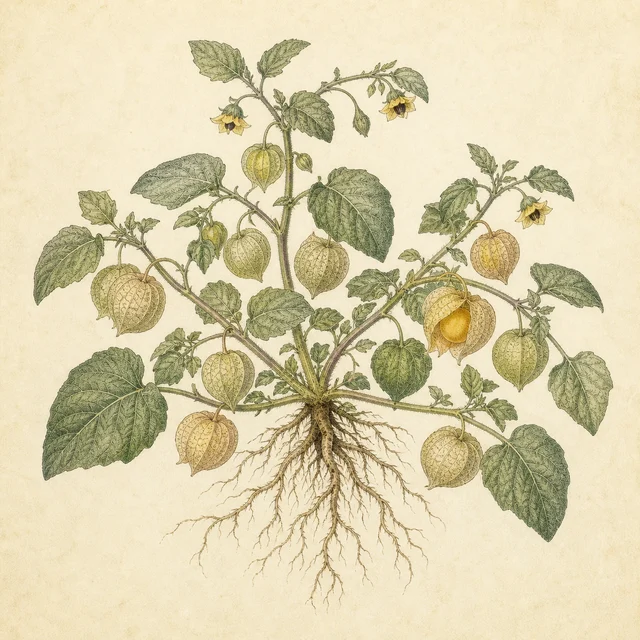
- Reliable light
- Full sun
- Water pattern
- Moderate
- Mature size
- 24 × 36 in
- Final spacing
- 24 in
- Season
- warm
Plant identity, types & settings
One plant guide. Clear details underneath.
Ground Cherry is the plant identity. Container, landscape, cutting, indoor, hydroponic, and harvest labels describe ways to grow it; they are not additional plant or cultivar names.
Plant types and varieties
These are real planning-distinct types or varieties attached to Ground Cherry. Named cultivars can still vary, so confirm the packet or plant label.
Compact · container
A low, spreading ground cherry selected for a smaller footprint and harvest from fallen ripe fruit.
- Mature size
- 16 × 26 in
- Spacing
- 20 in
- Support
- Usually none
01 · Light & site
Give it the light its growth depends on.
Full sun, with roughly 6 to 8 hours of useful light. Warm soil and frost-free conditions
02 · Water & soil
Keep roots supplied without trapping water.
Water the complete root zone, then recheck conditions before watering again.
- Soil
- Loose, organic garden soil
- Drainage
- Well drained
- pH
- Species-dependent, commonly mildly acidic to neutral
03 · Spacing & roots
Make room for the mature plant.
Space plants about 24 inches apart. Expect a mature plant around 24 inches tall by 36 inches wide.
Spreading roots or runners can extend beyond the visible crown.
04 · Start
Begin with the method that protects establishment.
Use a healthy transplant, division, slip, or crown suited to the species.
05 · Care
Support healthy growth through the season.
Usually self-supporting at the stated mature size. Add a discreet stake only if wind, bloom weight, or an exposed site makes it necessary.
- Upkeep
- Moderate
- Feeding
- Moderate
- Watch for
- Flea beetles, Cutworms, Leaf spot
06 · Flower or harvest
Harvest and maturity
65 to 90 days. Use the seed packet or plant label for cultivar-specific timing and harvest cues, then adjust for temperature, light, and the stage you intend to pick.
07 · Safety
Know the cautions before you place or use it.
- Only fully ripe fruit is used as food; confirm species and ripeness.
- Sprawling stems need clean ground or mulch beneath them.
08 · Sources
Check the evidence behind the guide.
Guide record: July 20, 2026. Region, cultivar, regulations, and current product labels can change the right decision.
Working checklist