Native & pollinator plant · Growing guide
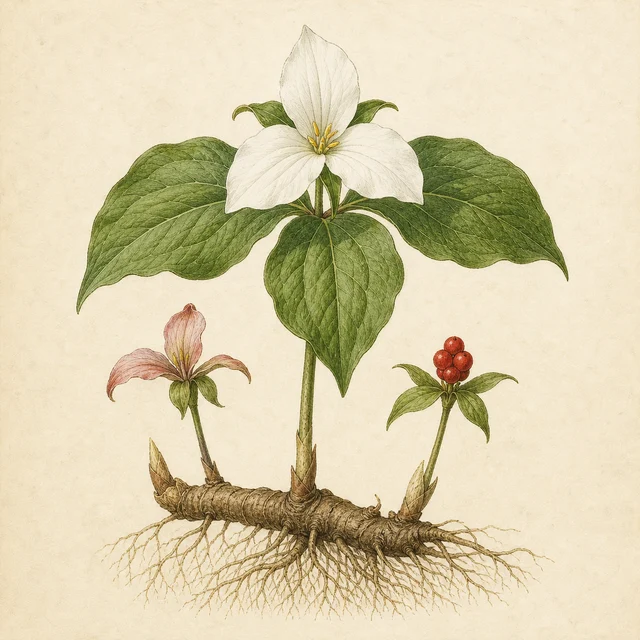
Large-flowered Trillium
Trillium grandiflorum · Melanthiaceae family
Large-flowered Trillium is an upright native & pollinator plant grown for regional native gardens, pollinator habitat, and ecological planting. Use this guide to match its light, water, soil, space, seasonal care, and safety needs.
Guide status Exact ranges are a catalog starting point. Check the plant label, cultivar, region, and linked sources before planting.
- Reliable light
- Part shade
- Water pattern
- Moderate
- Mature size
- 18 × 21 in
- Final spacing
- 21 in
- Season
- perennial
Plant identity, types & settings
One plant guide. Clear details underneath.
Large-flowered Trillium is the plant identity. Container, landscape, cutting, indoor, hydroponic, and harvest labels describe ways to grow it; they are not additional plant or cultivar names.
Ways to grow it
These are garden or production settings—not cultivar names and not extra plants.
Regional Straight Species
Verify that the species is native to the planting region and source nursery-propagated local material when available.
- Mature size
- 18 × 21 in
- Spacing
- 21 in
- Container
- 3+ gal · 17+ in deep
01 · Light & site
Give it the light its growth depends on.
Part shade, with roughly 2 to 4 hours of useful light. Perennial timing, dormancy, and winter survival are climate- and cultivar-specific.
02 · Water & soil
Keep roots supplied without trapping water.
Water deeply when the active root zone begins to dry.
- Soil
- Loose, organic, species-appropriate garden soil
- Drainage
- Well drained
- pH
- Species-specific; verify the grower label and linked guidance
03 · Spacing & roots
Make room for the mature plant.
Space plants about 21 inches apart. Expect a mature plant around 18 inches tall by 21 inches wide.
deep, clumping, fibrous, taprooted, or rhizomatous species-specific root system. Container figures are a planning floor, not a claim that long-term container culture is ideal.
04 · Start
Begin with the method that protects establishment.
Use the species-appropriate method—seed, cutting, division, bulb, tuber, or a healthy transplant—and follow the plant label for timing.
05 · Care
Support healthy growth through the season.
Usually self-supporting in a compatible plant community. Add a discreet stake only if wind, bloom weight, or an exposed site makes it necessary.
- Upkeep
- High
- Feeding
- Moderate
- Watch for
- Species-specific insects, Crowding-related disease, Moisture stress
06 · Flower or harvest
Flowering and wildlife value
180–730 days to the first expected harvest, bloom, or established display; perennials may need additional seasons to settle. Bloom timing and establishment vary with climate, plant provenance, and the exact species or cultivar; locally appropriate stock is the best reference.
07 · Safety
Know the cautions before you place or use it.
- Use legally nursery-propagated stock and do not collect from wild populations.
08 · Sources
Check the evidence behind the guide.
Guide record: Editorial review pending; generated 2026-08-10. Region, cultivar, regulations, and current product labels can change the right decision.
Working checklist