01 · Timing
When and how to begin
Choose a species native and appropriate to the region, then follow its specific dormancy, stratification, and moisture requirements.
02 · Growing sequence
See the crop change before it happens.
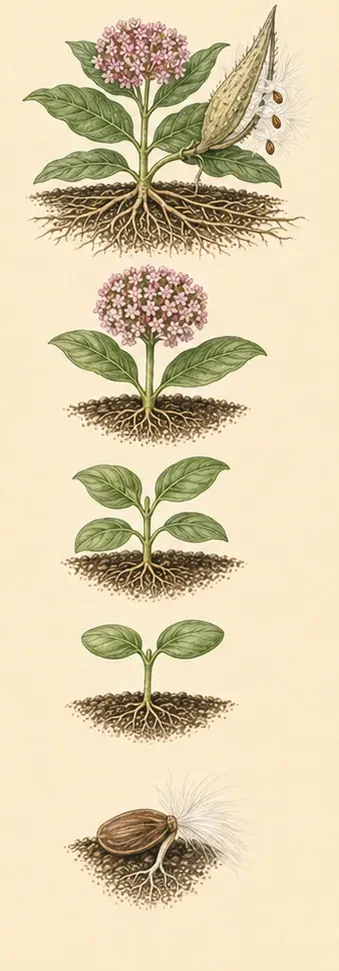
- 01Identify an appropriate local species.
- 02Prepare seed according to that species.
- 03Avoid pesticide exposure on host foliage.
- 04Manage pods and spreading according to the garden context.
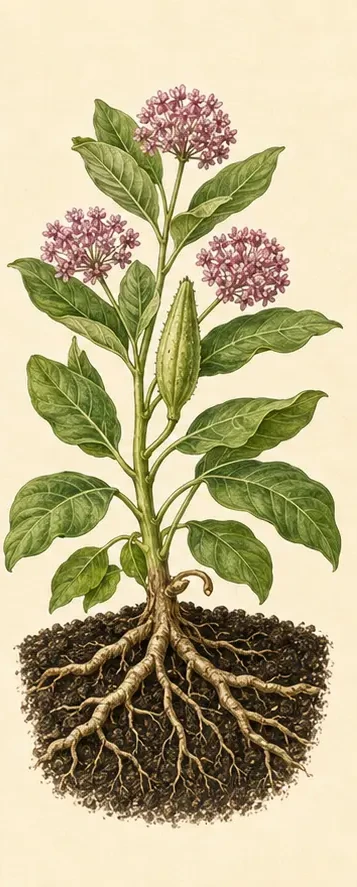
03 · Below the surface
Give the roots their working volume.
12–36 in final spacing
Species dependent
Root habit varies by species; choose a locally appropriate species and permanent site before planting.
04 · Harvest
Know when it is ready
Still developing
Leave healthy plants available for caterpillars and allow selected pods to mature only where spread is appropriate.
Quality or vigor may decline when harvest is delayed beyond the intended stage.
05 · Common trouble
Inspect before you treat
Symptoms can share several causes. Check moisture, recent weather, and the complete plant before applying a treatment.
Open the illustrated problem solver →