Fruit · Growing guide
Watermelon
Citrullus lanatus · Cucurbit family
Watermelon is a vine fruit grown for fruit, large-space crop, and fresh fruit. Use this guide to match its light, water, soil, space, seasonal care, and safety needs.
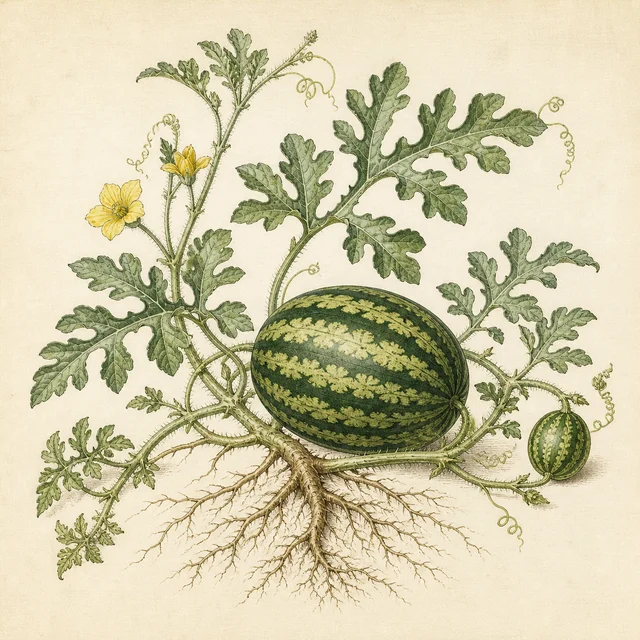
- Reliable light
- Full sun
- Water pattern
- Consistent
- Mature size
- 18 × 120 in
- Final spacing
- 48 in
- Season
- warm
Plant identity, types & settings
One plant guide. Clear details underneath.
Watermelon is the plant identity. Container, landscape, cutting, indoor, hydroponic, and harvest labels describe ways to grow it; they are not additional plant or cultivar names.
Plant types and varieties
These are real planning-distinct types or varieties attached to Watermelon. Named cultivars can still vary, so confirm the packet or plant label.
full-size
A long-vined watermelon bearing large fruit and requiring substantial warm ground, water, and season length.
- Mature size
- 18 × 144 in
- Spacing
- 60 in
- Support
- Usually none
icebox
A shorter-vined watermelon with smaller fruit suited to gardens that cannot accommodate a full picnic type.
- Mature size
- 18 × 72 in
- Spacing
- 36 in
- Support
- Usually none
01 · Light & site
Give it the light its growth depends on.
Full sun, with roughly 6 to 8 hours of useful light. Warm soil and frost-free conditions
02 · Water & soil
Keep roots supplied without trapping water.
Keep the active root zone evenly moist while preserving drainage.
- Soil
- Loose, organic garden soil
- Drainage
- Moist but drained
- pH
- Species-dependent, commonly mildly acidic to neutral
03 · Spacing & roots
Make room for the mature plant.
Space plants about 48 inches apart. Expect a mature plant around 18 inches tall by 120 inches wide.
A concentrated crown supports a wide above-ground vine; avoid disturbing feeder roots.
04 · Start
Begin with the method that protects establishment.
Direct sow or transplant according to crop-specific temperature and root-disturbance guidance.
05 · Care
Support healthy growth through the season.
Trellis or sturdy vertical support. Put it in place early, before stems, canes, vines, or fruit load make access difficult.
- Upkeep
- High
- Feeding
- High
- Watch for
- Cucumber beetles, Aphids, Powdery mildew
06 · Flower or harvest
Harvest and maturity
75 to 110 days. Use the seed packet or plant label for cultivar-specific timing and harvest cues, then adjust for temperature, light, and the stage you intend to pick.
07 · Safety
Know the cautions before you place or use it.
- Confirm cultivar, regional timing, and toxicity or food-use details with local extension guidance.
- Keep unknown plant parts away from children and pets.
08 · Sources
Check the evidence behind the guide.
Guide record: July 20, 2026. Region, cultivar, regulations, and current product labels can change the right decision.
Working checklist