Troubleshooting worksheet
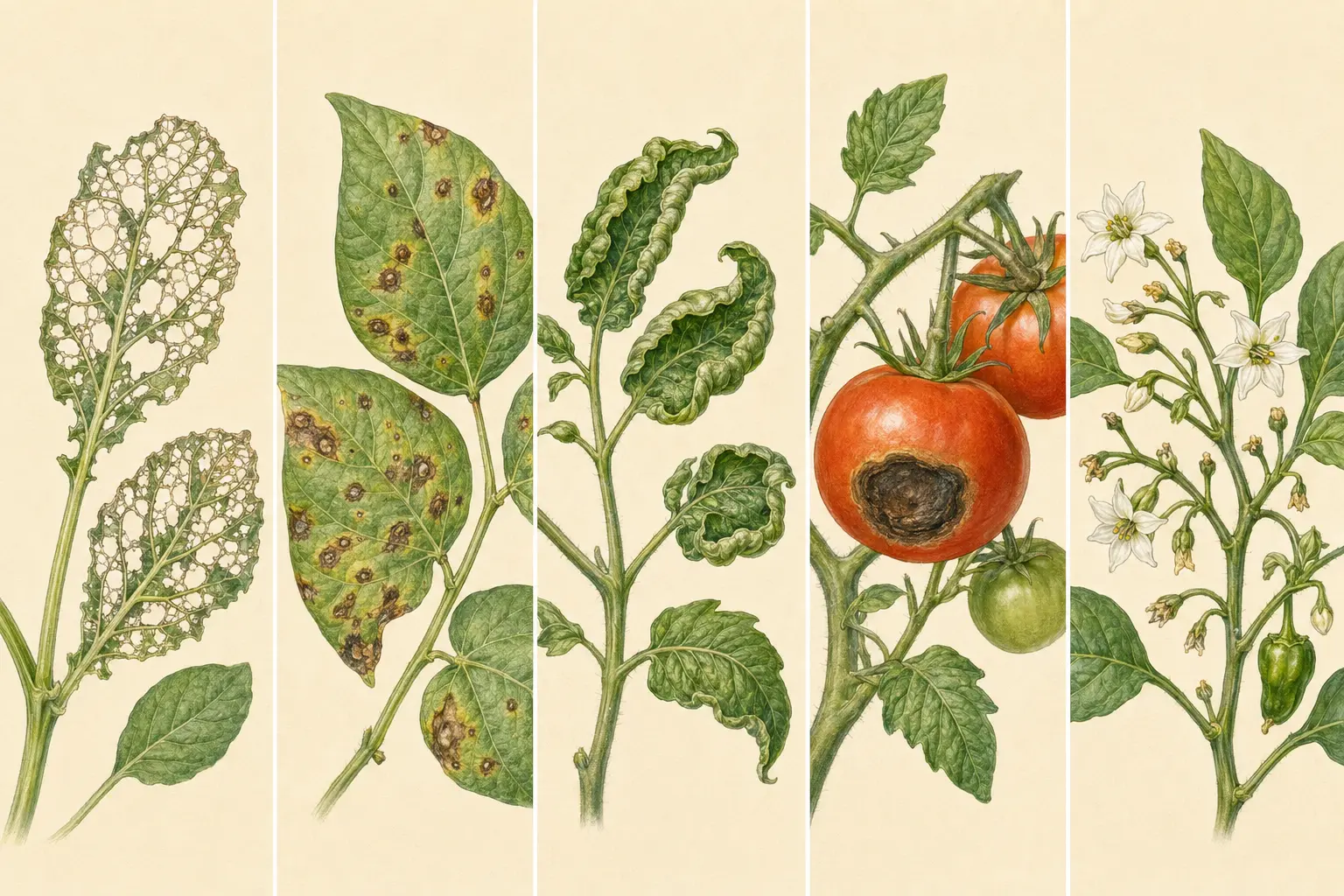
Blossom-end rot
A dark, sunken patch develops at the blossom end of tomato, pepper, squash, or related fruit.
Look before acting
A visual match narrows questions. It does not prove a diagnosis.
Compare the location, pattern, affected plant parts, recent weather, watering, and changes in care before choosing a response.
Possible causes
Keep the list open at first.
01Calcium movement disrupted by uneven water
02Root damage
03Rapid growth
04Excess fertilizer salts
05Unusual root-zone conditions
Questions to answer
Look at the whole plant and root zone.
- Has soil moisture fluctuated sharply?
- Were roots recently damaged?
- Is the newest fruit affected?
- Was fertilizer applied heavily?
Low-risk actions
Change one thing at a time.
- Remove affected fruit if it will not be useful.
- Stabilize moisture through the root zone.
- Protect roots with suitable mulch.
- Use a soil test before assuming calcium is absent.
Working checklist