Troubleshooting worksheet
Skeletonized leaves
Soft tissue is eaten between veins, leaving a lace-like network or translucent windowing.
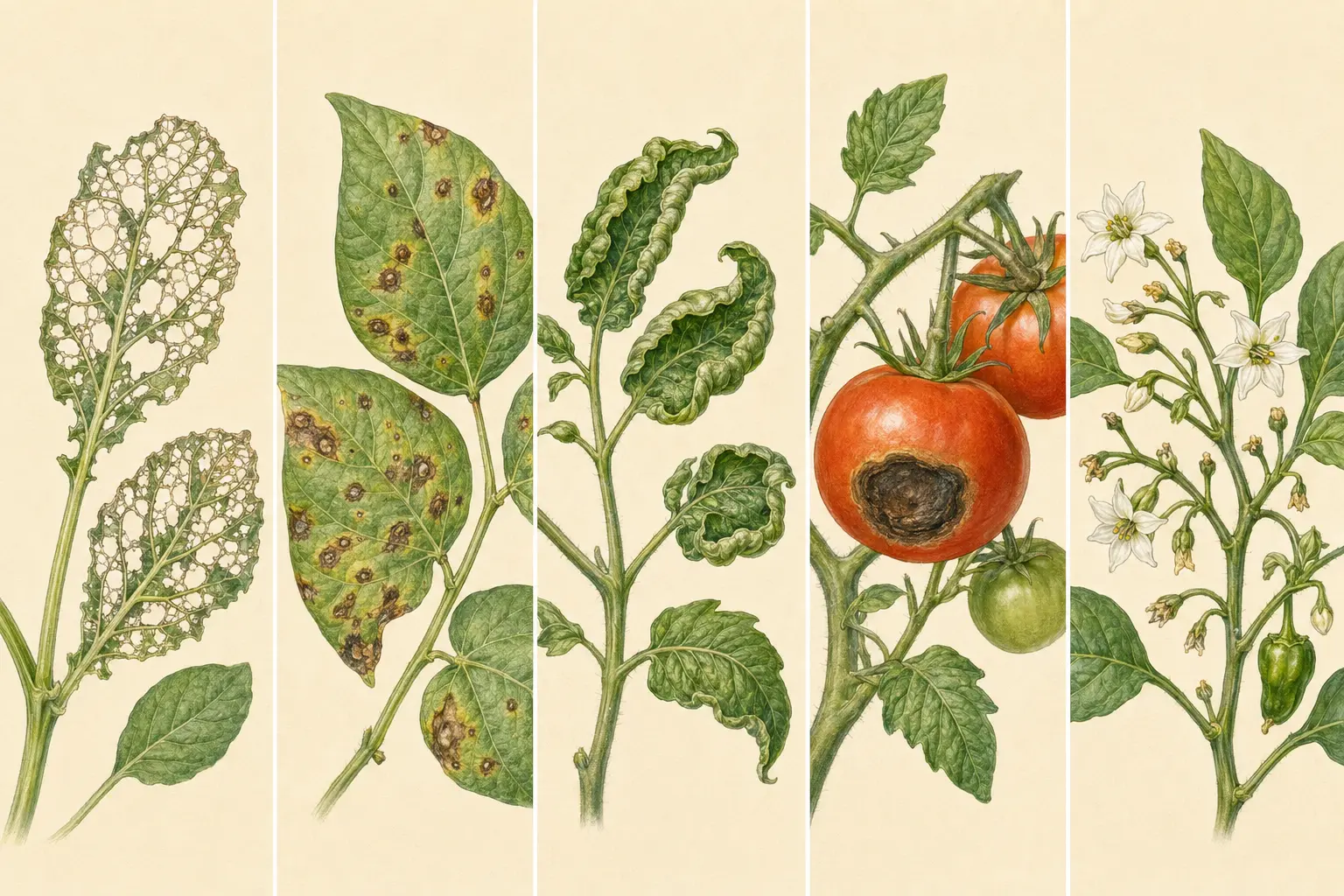
Look before acting
A visual match narrows questions. It does not prove a diagnosis.
Compare the location, pattern, affected plant parts, recent weather, watering, and changes in care before choosing a response.
Possible causes
Keep the list open at first.
01Beetles or larvae
02Sawfly larvae
03Caterpillars
04Slugs
05Old damage after the pest has left
Questions to answer
Look at the whole plant and root zone.
- Which plant and leaf age are affected?
- Are insects on leaf undersides?
- Is damage fresh and expanding?
- Are veins intact?
Low-risk actions
Change one thing at a time.
- Inspect at several times of day.
- Photograph and identify the insect before control.
- Hand-remove manageable pests.
- Protect unaffected new growth with an appropriate barrier when useful.
Working checklist