Troubleshooting worksheet
Slow or stunted growth
The plant remains smaller than expected, produces short internodes, or stops making vigorous new growth.
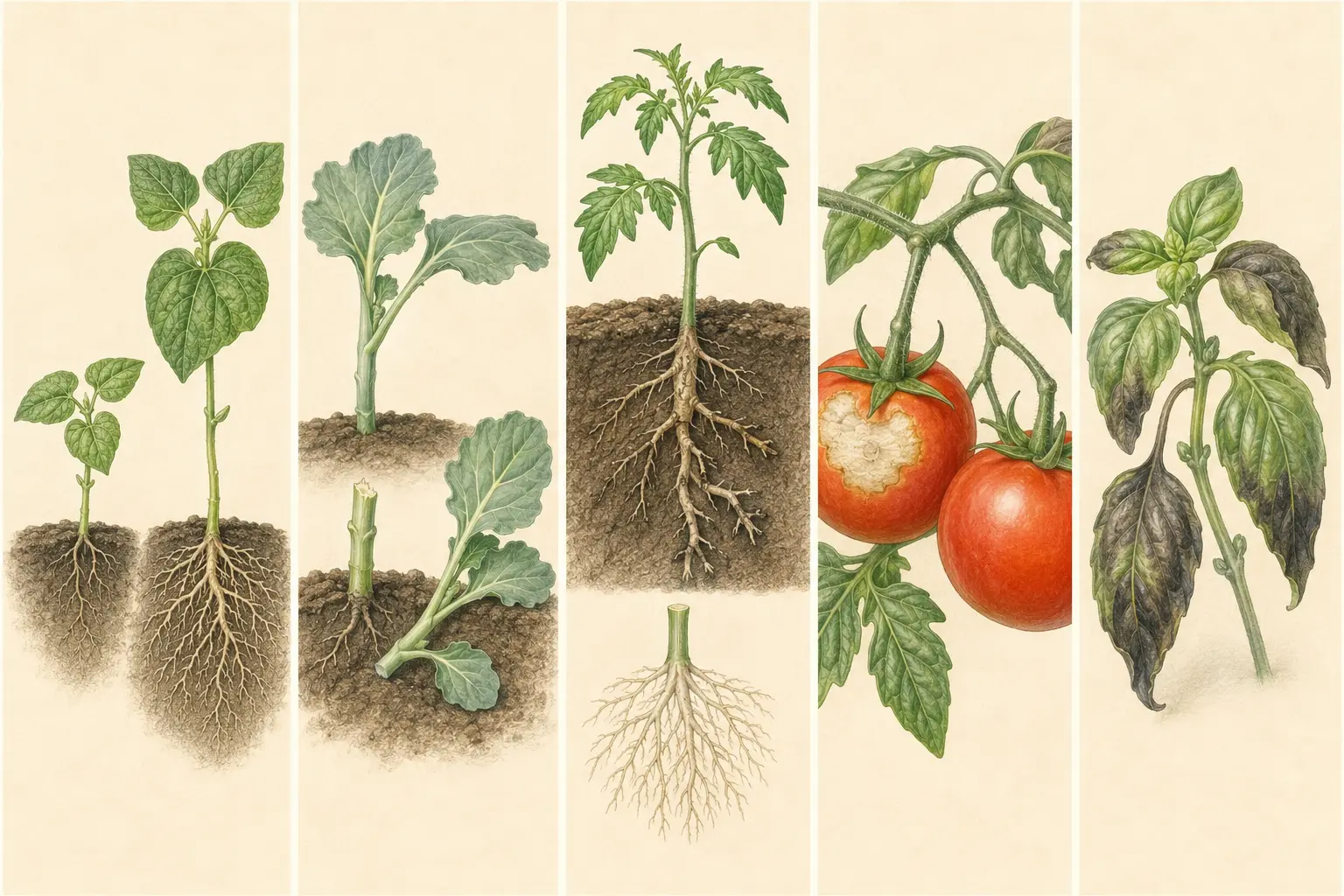
Look before acting
A visual match narrows questions. It does not prove a diagnosis.
Compare the location, pattern, affected plant parts, recent weather, watering, and changes in care before choosing a response.
Possible causes
Keep the list open at first.
01Cold soil or weather
02Root restriction
03Water imbalance
04Low light
05Nutrient, pH, pest, or disease stress
Questions to answer
Look at the whole plant and root zone.
- Has the plant ever grown normally?
- Are roots circling or damaged?
- Is the soil cold, saturated, or compacted?
- How does it compare with nearby plants?
Low-risk actions
Change one thing at a time.
- Check roots, drainage, light, and temperature first.
- Compare with an unaffected plant of the same crop.
- Use soil testing before broad fertilization.
- Replace severely compromised annuals when the season is short.
Working checklist